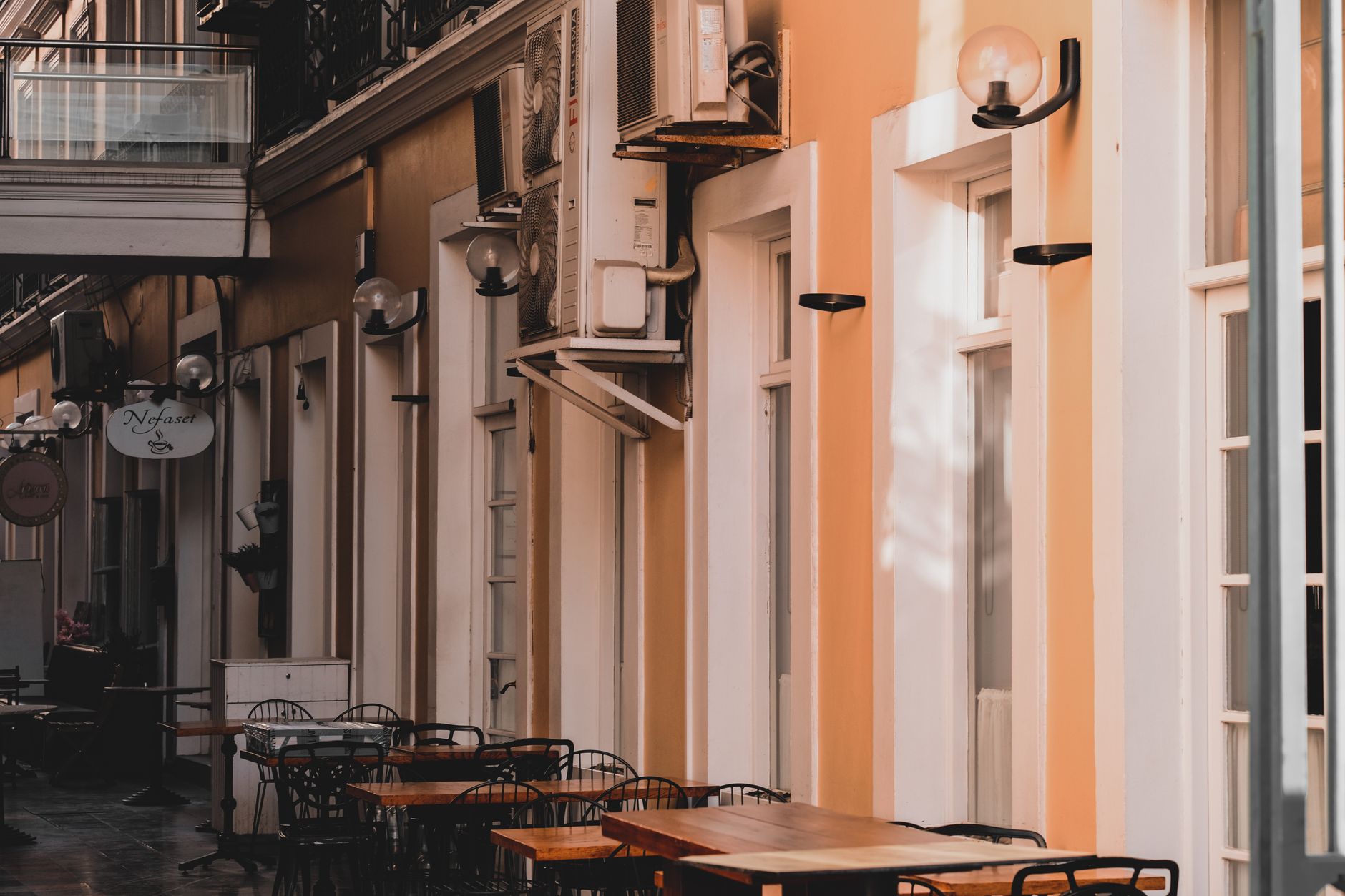
Walk into a place that runs the whole building off one amplifier and one volume knob, and you can hear the problem in about ten seconds. The bar wants energy. The dining room wants conversation. And whatever leaks through the door is what the patio gets. A restaurant sound system without zones is not really a system at all, it is one loud room with speakers in it.
Zones fix that. A zone is an area of your building with its own speakers, its own volume, and its own source. Get them right and the music in each space finally starts doing its job instead of fighting the room next door.
A Restaurant Sound System Is Zones, Not Speakers
Think about what each part of the building is selling on a Friday night.
The dining room is selling conversation. Guests should feel the music without ever raising their voices over it, which usually means more small speakers at lower volume, not two big ones cranked up. You want an even blanket of sound, with no hot table sitting under a speaker and no dead table stranded between them.
The bar is selling energy. It wants fuller sound, more low end, and a livelier playlist than the dining room twenty feet away. But those two spaces often share one open ceiling, which is exactly why they need separate zones with separate control instead of one compromise volume that serves neither.
The Zones Everyone Forgets
The kitchen belongs to your staff, and staff morale is real. Give the back of house its own zone and its own source, and let them kill the music during a slammed service if that helps them move.
Restrooms are the other forgotten zone. Dead silence in there feels clinical, and it means every word carries through the door. A quiet wash of music fixes both for the cost of a ceiling speaker or two.
And none of this is decoration. It is behavior. Ronald Milliman's 1986 field study found that slow-tempo music kept dining parties seated longer and significantly increased bar purchases. A 2024 field experiment published in Behavioral Sciences put a stopwatch on it: diners hearing slow music stayed an average of 80.3 minutes, while diners under fast music left at 57.3.
Slow music held the table for 80 minutes. Fast music turned it in 57. Your playlist is managing your revenue whether you manage it or not.
Tempo is a lever. Zones are what let you pull it differently in different rooms at the same time.
Presets That Follow the Daypart
Tuesday lunch and Friday at nine are two different restaurants wearing the same walls. Lunch wants conversation-level audio everywhere and maybe nothing on the patio. Friday night wants the bar pushed, the dining room a notch warmer, and the patio alive until close.
A modern DSP (digital signal processing) platform stores each of those states as a preset and switches on a schedule, so the right sound shows up at 11 a.m. and again at 9 p.m. without anyone touching a rack. We design these on Q-SYS, where one daypart change can move every zone volume, swap sources, and wake the patio in a single scene. Staff get a wall controller with exactly the controls they need and nothing they can break.
The source list deserves the same intent as the schedule. A five-month HUI Research study across 16 restaurants and nearly two million transactions found that music matched to the brand lifted sales 9.1 percent over random popular tracks. Random hits are not neutral. They cost you money.
The Patio Is Its Own Engineering Problem in Southern Colorado
Patio season is half the reason to run a restaurant in Fountain or Pueblo. It is also the hardest zone in the building. There are no walls to hold the sound in, street noise and wind eat the low end, and the climate actively attacks the equipment.
The corridor from Denver down through Colorado Springs averages 13 severe hailstorms a year, and Fountain sits at the south end of it. High-altitude sun is brutal on plastics and speaker cones, and a patio here cycles through a hard temperature swing every single day. Gear that shrugs at all that exists, but the consumer speaker on a big-box shelf was never designed for it.
This is what weather ratings are for. Biamp's guidance for outdoor loudspeakers recommends an IP (ingress protection) rating of IP54 or higher, with IP65 or IP66 where conditions get harsher, plus corrosion-resistant grilles and finishes that hold up under ultraviolet (UV) exposure. Read spec sheets, not adjectives. QSC's AD-S6T surface speaker, a common patio choice, carries an IP-54 rating, a weather-treated woofer, an aluminum grille, and an operating range of -4 to 122 degrees Fahrenheit. That is what "patio rated" should mean, on paper, before anything gets mounted.
How Many Zones Does Your Restaurant Sound System Actually Need?
Here is the judgment call, not a price list. A coffee shop usually lives well on one or two zones: the main room, plus the patio if you have one, with restrooms riding the quiet end of the main zone. Every zone is a real budget line, and nobody opens a coffee shop to buy amplifiers.
A full-service restaurant generally earns three or four: dining, bar, patio, and restrooms either on their own or tucked under dining. Add a private dining room and it absolutely gets its own zone, because nothing sours a rehearsal dinner like the bar playlist bleeding through a toast.
A sports bar is the demanding case. Main bar, dining, patio, restrooms, sometimes a game room, plus television audio that needs to jump into specific zones when the game actually matters. That is five or six, and pretending it is two is how you end up with a wall of screens nobody can hear. The honest answer always follows your floor plan and your dayparts, which is why our restaurant and bar audio process starts with a walkthrough of the actual space instead of a package.
The Licensing Paragraph Nobody Wants to Read
One honest paragraph, because it protects you. The streaming account on your phone is not licensed for your dining room; Spotify's own support page says it is "only for personal, non-commercial use." Music played in a business is a public performance, and public performance rights in the United States are licensed through performing rights organizations (PROs): ASCAP, BMI, SESAC, and GMR. The Colorado Restaurant Association notes that BMI and ASCAP alone represent more than 90 percent of the music played on domestic radio. Most owners land on a commercial music service that bundles licensing into the subscription. Whichever route you take, get what it covers in writing. That is not legal advice, just the homework to finish before the speakers go in.
Start With the Floor Plan, Not the Gear List
You do not need the biggest system on the market. You need the dining room, the bar, the patio, the kitchen, and the restrooms each doing their own job, on a schedule that knows the difference between Tuesday lunch and Friday night.
GTZ designs and installs zoned audio systems for venues in Fountain, Colorado Springs, and Pueblo, and our team holds Q-SYS Level One certification. Walk us through your building and we will tell you honestly how many zones it needs, including the ones it does not.
Free Consultation
Questions About Your IT?
Book a free assessment with Efrain. No sales pitch, no obligation.
Get Your Free Assessment