Building Out an Office This Year? Put the Conference Room AV in the Walls Before the Drywall Goes Up
Commercial building permits in the Pikes Peak region jumped 31% in 2025 after three years of decline, according to Pikes Peak Regional Building data reported by KOAA. That is a lot of office buildouts, tenant finishes, and new commercial space between Colorado Springs and Pueblo. And almost every one of those spaces is going to need a conference room that actually works, overhead paging that reaches the back of the shop, or a lobby screen somebody can update without a ladder.
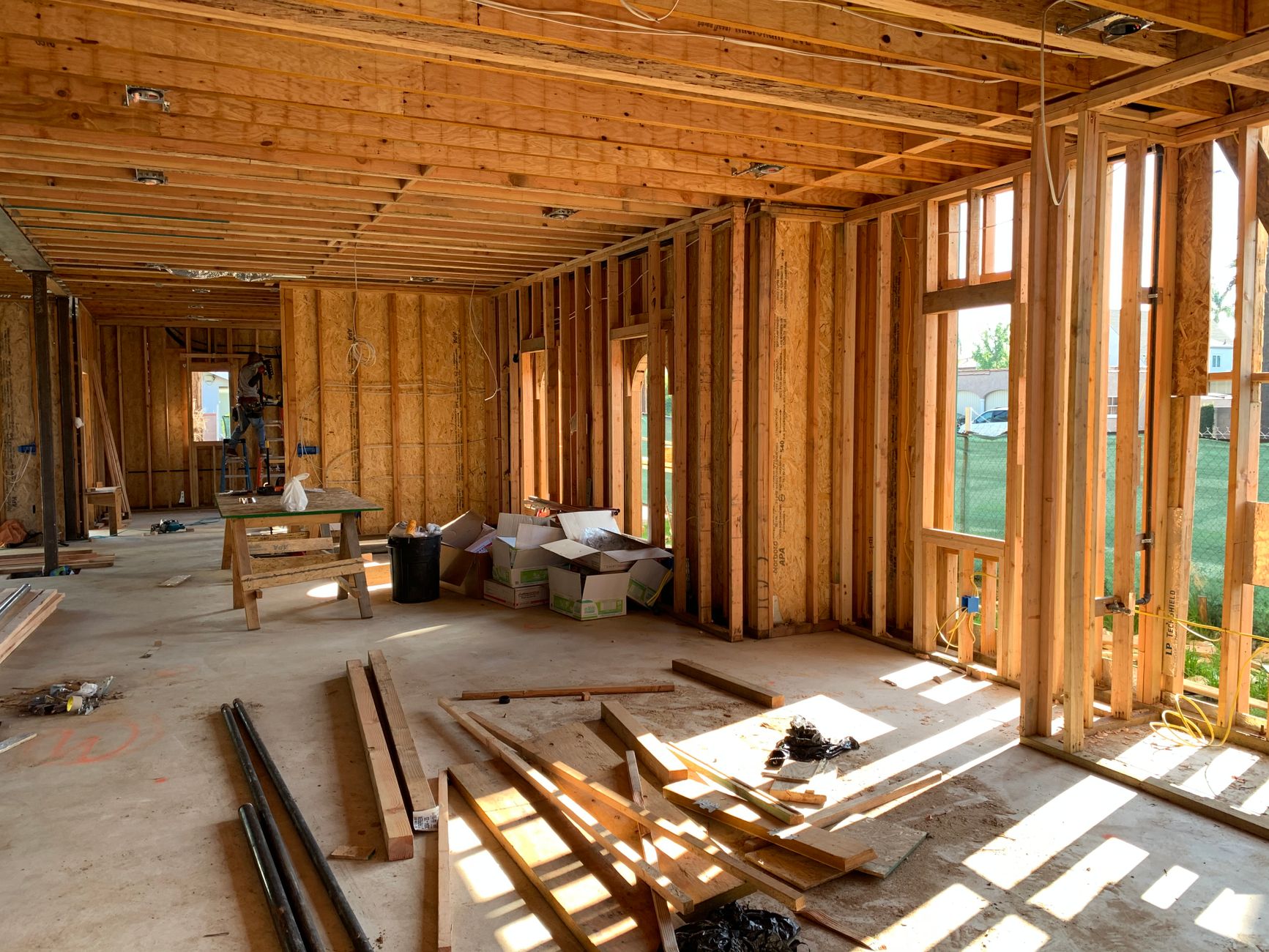
Here is the part that gets missed: the cheapest moment to put conference room AV in a building is while the walls are still open. Most owners call an AV company six months after move-in instead. By then the drywall is painted, the ceiling grid is in, and every cable has to be fished, drilled, and patched into a finished space.
What a retrofit actually costs you
Not in dollars. In disruption. A technician working in open framing pulls cable in minutes. The same pull in a finished office means opening access holes, drilling past fire-stops, patching and repainting, and scheduling all of it around your staff trying to get work done. Some rooms end up with surface raceway running along the baseboard because there was no other path. It works. It also looks exactly like what it is: an afterthought.
We see this constantly. The building is beautiful, the network closet is clean, and the conference room has a soundbar balanced on a credenza with an HDMI cable taped along the wall.
Commercial permits in the Pikes Peak region rose 31% in 2025. Every one of those buildouts is deciding right now, on paper, whether its AV will be built in or bolted on.
The finger-pointing problem is real, and it is documented
Even when AV does make it into the plans, it usually arrives as a third contractor who has to coordinate with the electrician and the network vendor. That coordination is where buildouts bleed money. Trade publication EC&M documented a project where the electrical contractor did not know that an offset in a conduit run counts as a 90-degree bend under cabling standards. The low-voltage supervisor caught it after the fact, and somebody got to pay for pullboxes and rework.
AV has its own versions of this. Display outlets want extra-deep back boxes and generous conduit so pre-terminated cables can make the bend. Ceiling microphones and speakers need locations nailed down before the grid goes in. None of it is hard. But it belongs to three different scopes on most jobs, and when the question of who installs what gets answered late, the answer is rework.
If you run projects for a living, you already know this pattern. It is the same reason you hate having four different technology vendors on a jobsite: every handoff between them is a place for something to fall through.
One crew for the cabling, the network, and the AV
This is the whole reason we built our AV design and install service the way we did. GTZ pulls the low-voltage cabling, stands up the network, and installs the AV as one scope. There is no seam between the AV vendor and the network vendor because they are the same people. When the conference room needs a cable path, the person drawing it is the same person who will terminate it.
On the platform side, we are Q-SYS Level One certified and we build on Q-SYS because it runs audio, video, and control over standard Ethernet, the same network we are already installing. The conference rooms we put in work with Microsoft Teams, Zoom, and Google Meet over a single driverless USB connection. One button starts the meeting. Nobody spends the first ten minutes asking whether everyone can hear.
What to put in the low-voltage scope this week
You do not need final equipment picks to protect yourself. You need pathways and locations:
- Deep back boxes and conduit at every display location, sized for the cable bends
- Ceiling speaker and microphone locations agreed before the grid closes
- Network drops to every conference room, huddle space, and signage screen
- Paging zones roughed in while the ceiling is open, especially over shop floors and warehouses
And one opinion, honestly held: do not let the AV scope get value-engineered down to "owner to provide TV." That line is how a new building ends up with the taped HDMI cable.
Southern Colorado is building. Build it in.
Whether it is your own office in Fountain, a shop expansion in Pueblo, or a tenant finish off Powers, the window where AV is cheap closes the day the drywall crew shows up. If you are a GC who wants one less vendor to referee, or an owner who wants the conference room done right the first time, we will walk the plans with you and mark up exactly what should go in the walls. No charge for the conversation.
Free Consultation
Questions About Your IT?
Book a free assessment with Efrain. No sales pitch, no obligation.
Get Your Free Assessment